
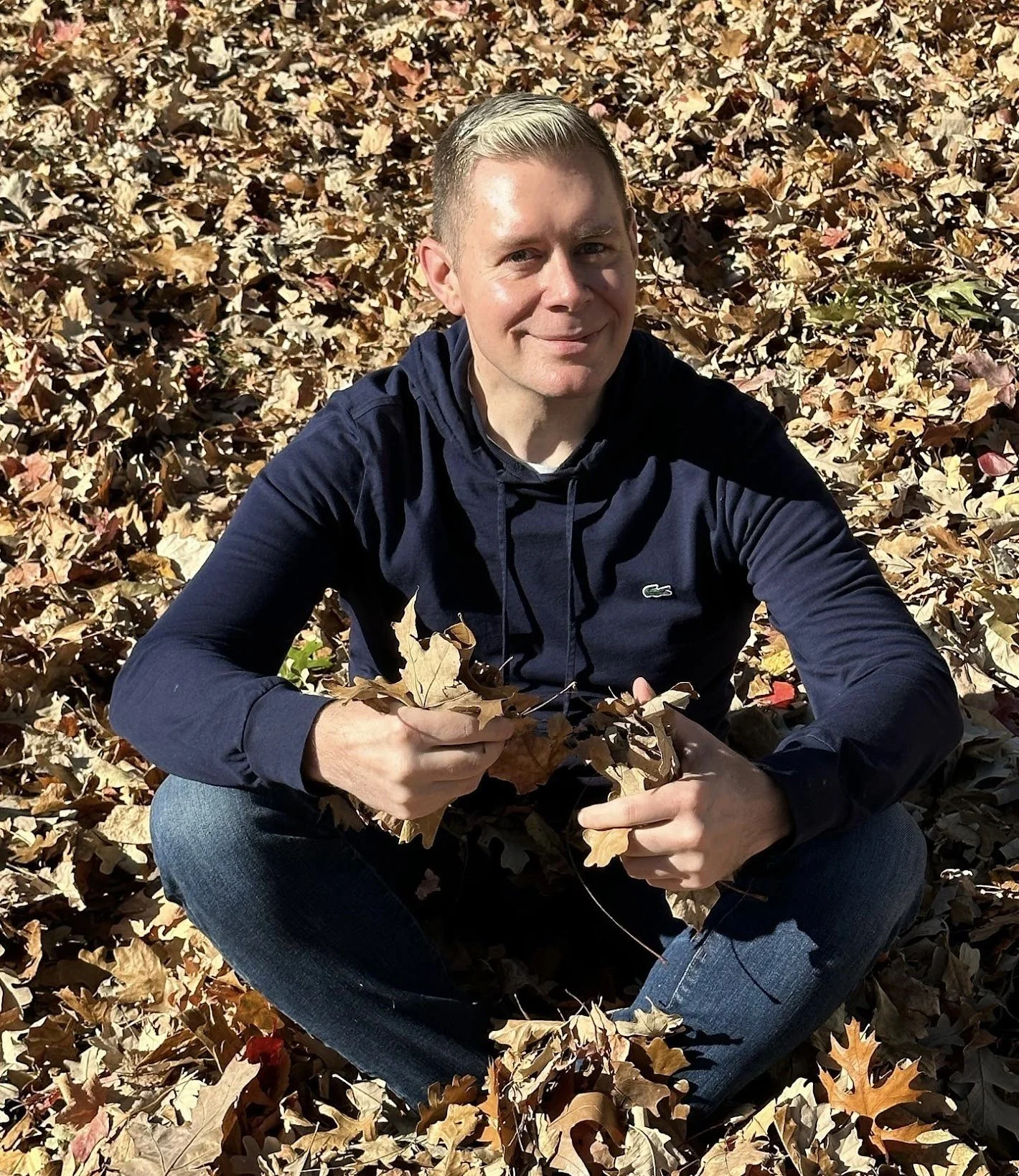
Steven Miller
co-founder & lead historian
Steven Miller is a computational historian of United States social and political historian. He pursued an interdisciplinary PhD in history at the University of Minnesota before transferring to the University of Wisconsin–Milwaukee School of Information Studies where he is currently a student reacher. Focusing on the social movements and political transformations of the 1960s and 1970s, his research examined how social demonstrations during the era of the Vietnam War culminated in the Watergate Scandal and the eventual downfall of the Nixon administration.
During his doctoral studies at the University of Minnesota, Steven taught a freshman-level history course on 1960s United States social and political history. He later held a residency in the archives of Utrecht University in the Netherlands where he worked extensively with primary source materials and contributed to collection development and access initiatives. He also worked with a Düsseldorf, Germany museum in the implementation of an immersive archival exhibit.
Outside of academia, he enjoys bouldering, hiking, traveling, and visiting historical sites which adds a valuable dimension to his life and work. Soren is a United States Army veteran and is a native of the Lake Geneva, Wisconsin area.
Curriculum Vitae
Education
2026 - 2030 University of Wisconsin–Milwaukee, Milwaukee, WI
School of Information Studies
Researcher in Computational Archival Science
2020 - 2024 University of Minnesota, Twin Cities, Minneapolis, MN
Departments of History and Computer Science & Engineering
Integrated Bachelor of Arts / Doctor of Philosophy in History
2022 Florida International University, Miami, FL
Department of History
Major in History
Residencies & Fellowships
Utrecht University, Utrecht, Netherlands
Archival Residency: August - November 2025
Academic Activities
2023 - 2024 Chair, Institute of Electrical and Electronics Engineers (IEEE) UMN Student Branch
2020 - 2022 UMN Solar Vehicle Project engineering team
Courses Taught
2023 - 2024 University of Minnesota, Twin Cities
HIST 1811 / The Sixties: History and Memories
Memberships & Affiliations
Society of American Archivists
National Council on Public History
The Association for Computers and the Humanities
Institute of Electrical and Electronics Engineers (IEEE)
HIST 1811 THE SIXTIES: HISTORY AND MEMORIES
This course traces the development of the 1960s and the first four years of the 1970s in United States politics and society. With a focus on civil rights, presidential politics, the Vietnam War, and a special focus on the Nixon Administration and Watergate, students in this course will learn about emerging themes of the period which culminate in the Watergate Scandal and the downfall of the Nixon Administration.
This 3 credit course was taught by Steven Miller at University of Minnesota in Fall 2023 and Spring 2024.
STUDENT REFLECTIONS
Very passionate and engaging lecturer. Was able to tell moments in history like stories rather than reading off of slides, which made this class very interesting. -S.F., 2023
Steven has been a very great lecturer for this class. He made the course more interesting than it had been before, by explaining the history with more than just reading off notes, but by talking about the events with passion making you feel as if you were at the events he was talking about. As someone who is not very familiar with history, his method of lecturing has been the most beneficial for me when it comes to understanding the material that he is teaching as he makes it both informative and very interesting to listen to. His lecturing makes me actually interested in a class that I wasn’t overall very interested in prior to the class. Overall, very great lecture. -M.R., 2023
His passion for the material shows and he makes us think critically about how different events may have impacted one another in a very creative and experimental way that gets everyone very engaged and involved. -B.L., 2023
Steven presented the material in a way that kept me engaged and I felt like I left with a good understanding of the topics we discussed. He interacted with the class and asked our opinions which I felt not only kept us engaged but helped us comprehend the material in a way that made sense as opposed to just taking in information. -K.K., 2023
I enjoyed his passion about the information and energy in prompting students to engage with it. The assignments were interesting and the grading was lenient as long as you put in effort. Overall a great experience. -S.T., 2023
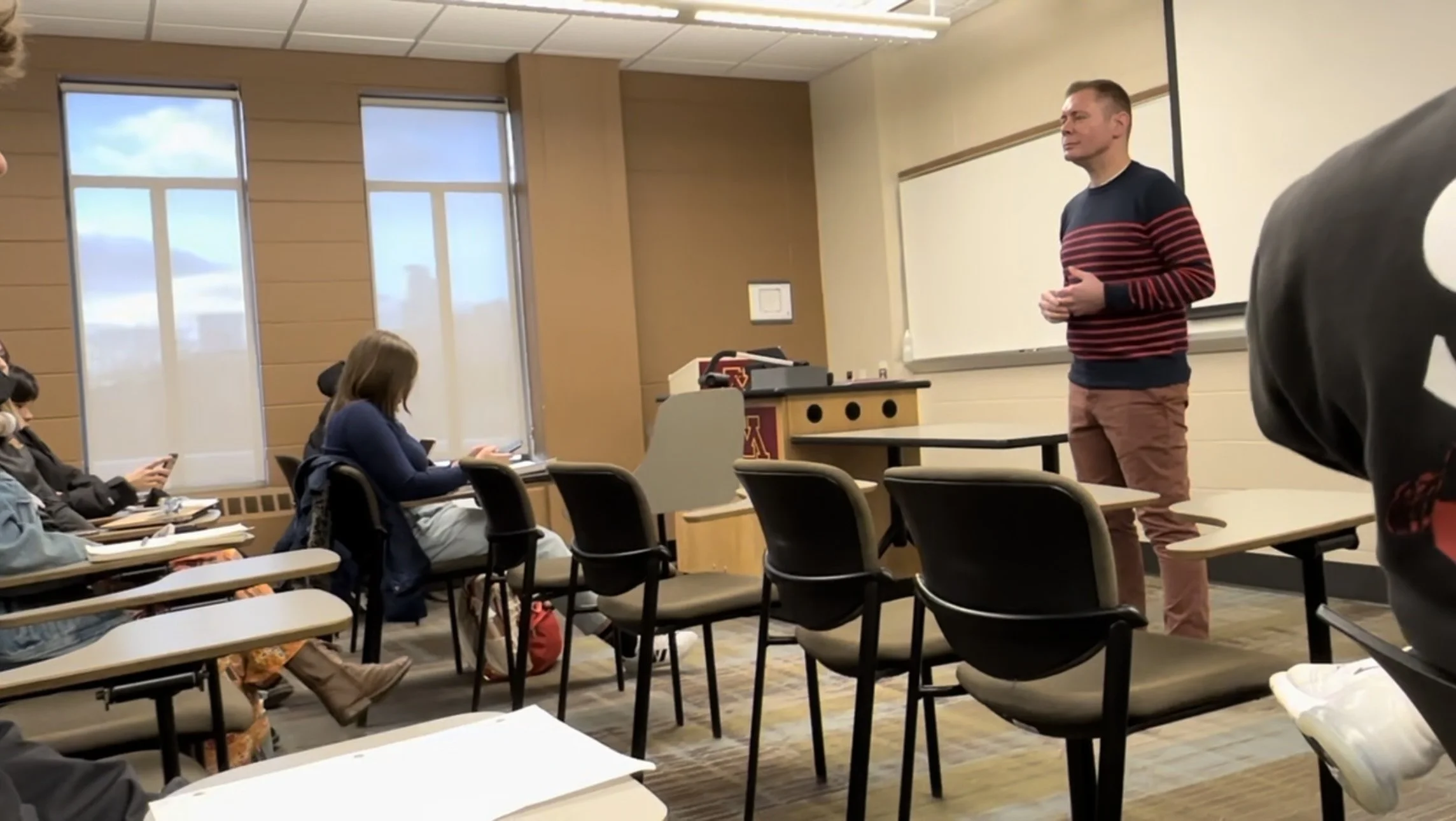
Dissertation
Steven’s dissertation, “Embodied Interpretation: Developing VR Interfaces for Public History Education,” investigates the role of immersive computational environments in advancing historical pedagogy and archival interpretation. Situated at the intersection of computational history, digital humanities, and archival studies, the dissertation argues that virtual reality and game-engine technologies provide powerful tools for enhancing public engagement with historical materials. Through the use of 3D modeling, interactive archival exhibits, and spatial simulation, immersive interfaces enable users to explore artifacts within their historical and institutional contexts while preserving fragile physical materials. By allowing audiences to interact with digitized objects, navigate reconstructed environments, and examine the broader narratives surrounding archival collections, these systems expand the interpretive possibilities of both public history education and archival practice. The project ultimately proposes a framework for integrating immersive technologies into heritage institutions as a means of preserving institutional memory while improving historical learning outcomes.
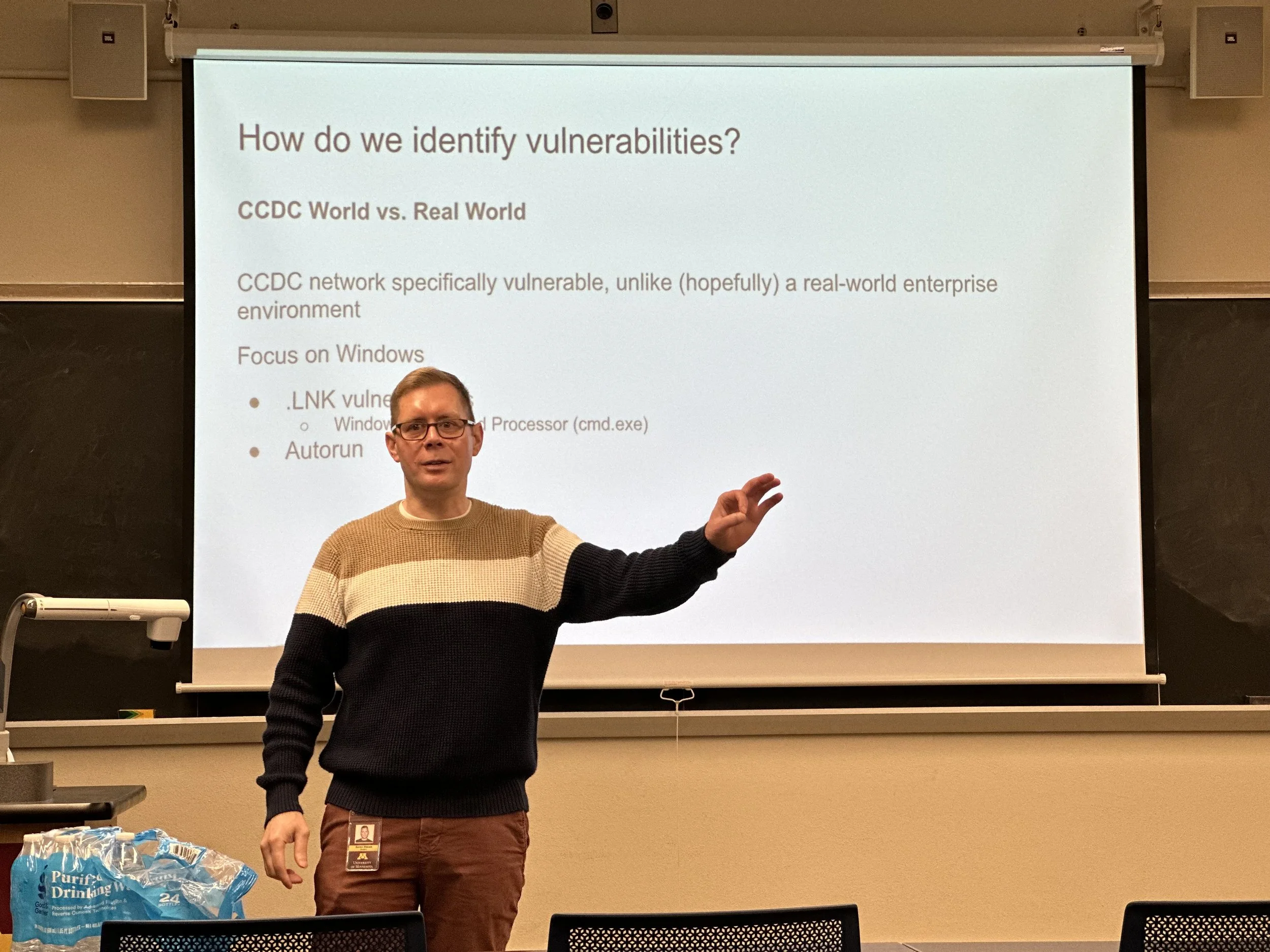
Steven Miller delivering a lecture to the University of Minnesota Cyber Defense Team.
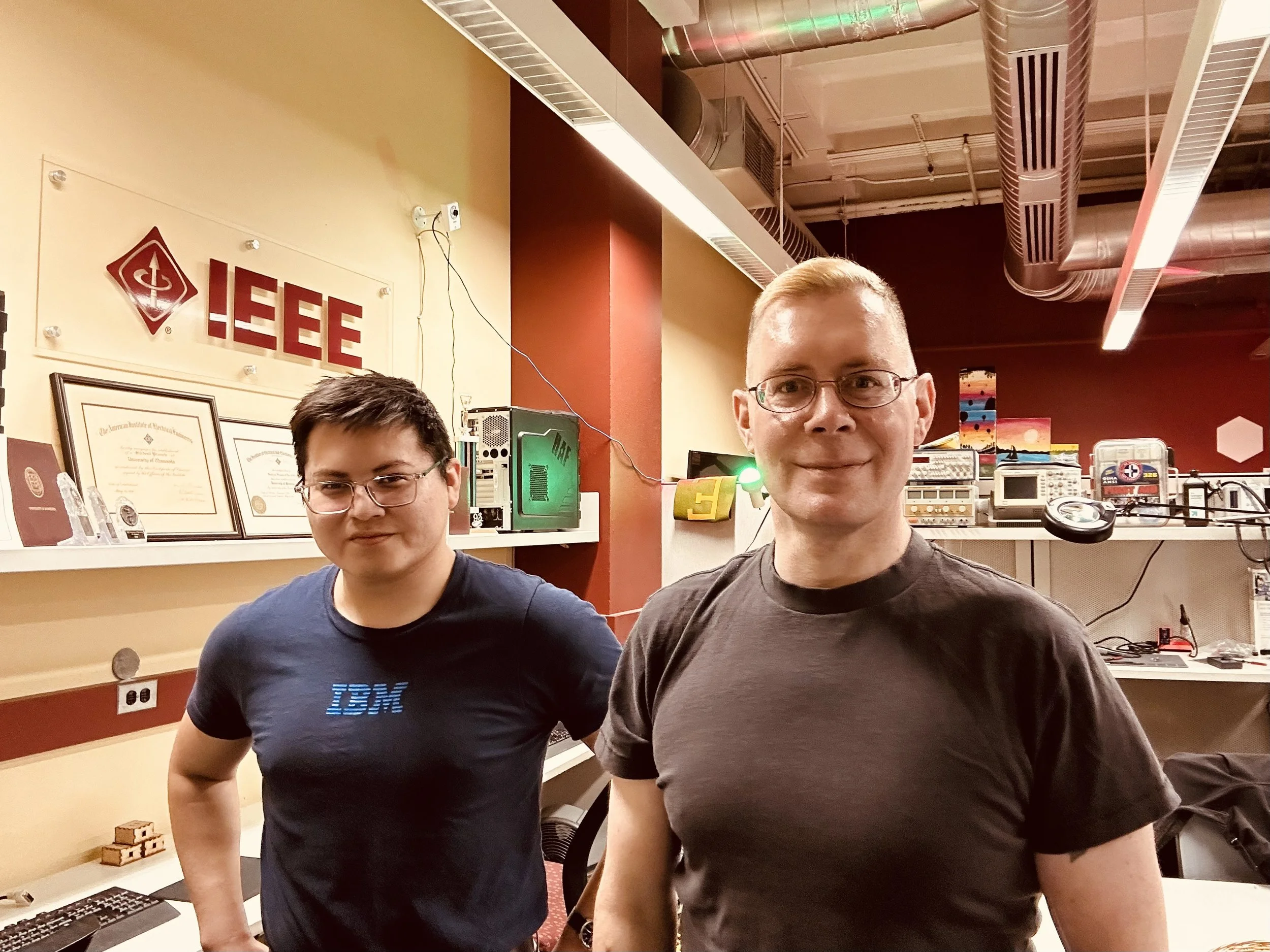
Steven in the IEEE lab at the University of Minnesota with colleague and quantum hardware researcher Onri Jay Benally. Soren’s tenure as Chair of the UMN student branch of IEEE was defined by a focus on the collaborative nature of systems engineering in the STEM fields as well as the humanities.